
The average electrical contractor loses 62% of calls that come in outside business hours. At $850 average residential job value and $15,000+ for commercial projects, that's $25,000+ in monthly revenue going to competitors who answer faster.
If you're an electrician, you know the game: 78% of customers contact three or more electricians for bids. First to respond wins 67% of the time. While you're pulling wire on a job site, your phone buzzes with bid requests. By the time you call back four hours later, they've already hired someone else.
The speed-to-bid race is brutal. But there's a better way than constantly interrupting jobs to answer your phone or watching thousands in revenue disappear because you couldn't respond fast enough.
AI operators are changing electrical contracting. Not chatbots that frustrate customers—actual AI assistants trained on electrical work that respond to bid requests in minutes, qualify commercial leads before you drive, and coordinate permit inspections automatically.
Ready to see how electrical contractors are winning 48% of bids instead of 18%? Let's dive into exactly how AI operators work, real results from electrical businesses, and a step-by-step setup guide. Start your free trial at Stay Ahead to test it yourself.
Why Electrical Contractors Lose 40% of Potential Jobs
Electrical teams lose bids when response speed, lead qualification, and scheduling handoff depend on manual callbacks. AI works best by tightening this front-line communication layer so estimators and field crews can stay focused on qualified work.
The electrical contracting industry has a response time problem. It's not about the quality of your work or your pricing—it's about who responds first.
The Bid Response Speed Race
Here's the brutal reality of electrical bidding:
- 78% of customers contact 3+ electricians for quotes
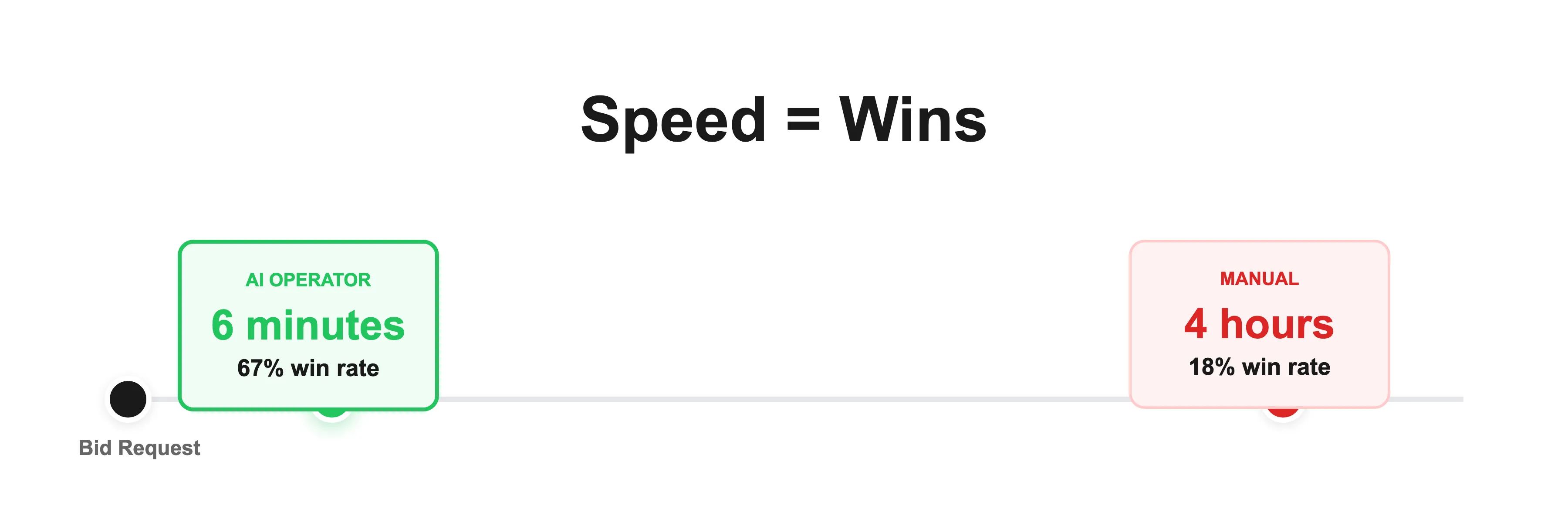
- First to respond wins 67% of bids
- Average contractor response time: 4 hours
- Winning contractor response time: 6 minutes
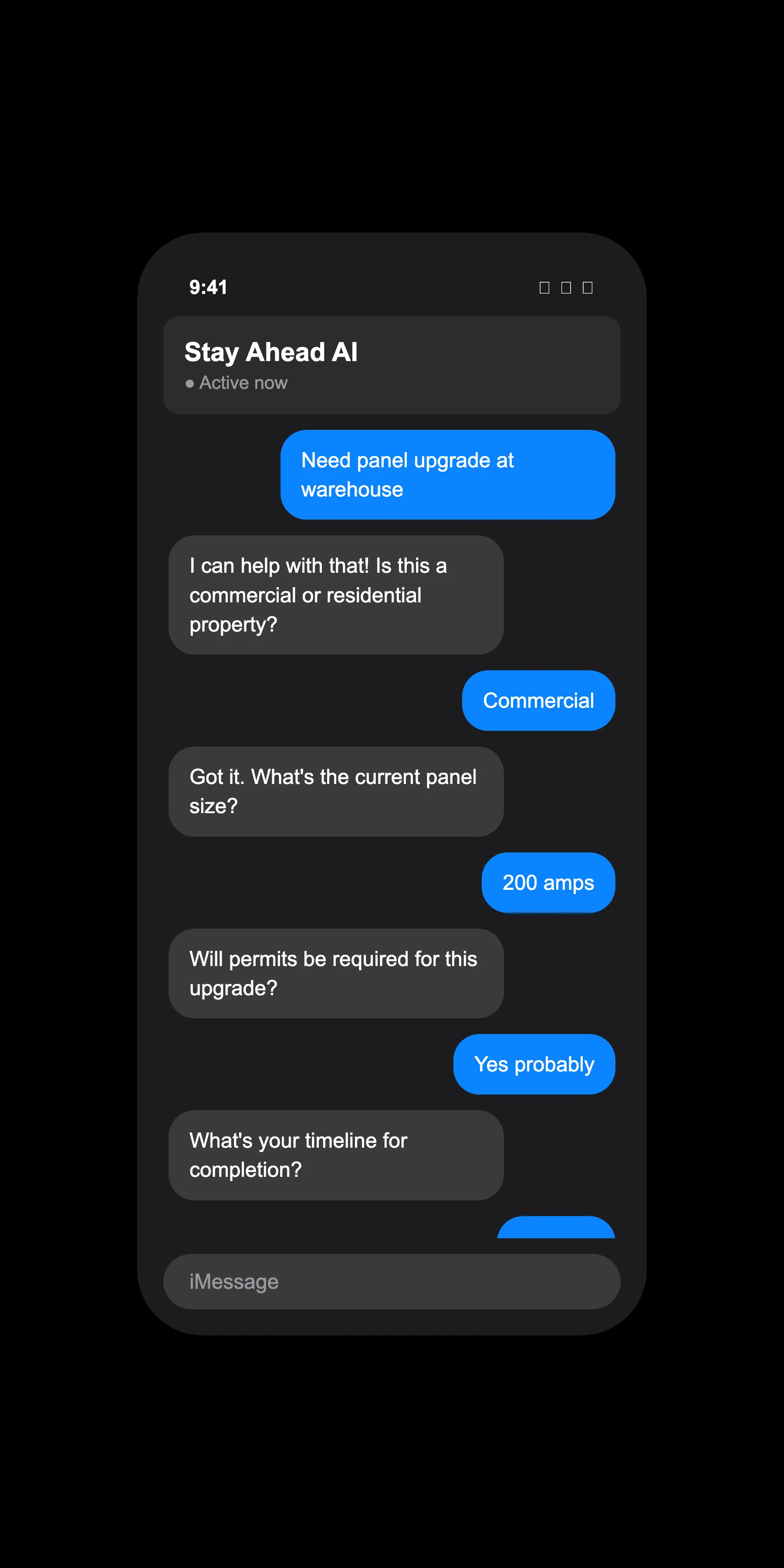
"If I don't respond to a bid request within 30 minutes, I don't get the job. Customers are comparison shopping, and they start with whoever answers first." — Tom R., Bay Area Electrical
When you're on a job site running conduit or troubleshooting a panel, bid requests are coming in via text, email, voicemail, and web forms. By the time you finish the job, clean up, and start returning calls, your faster competitors have already closed those deals.
At $850 per residential job and $15K+ for commercial projects, slow response times cost electrical contractors $25,000 to $40,000 in monthly revenue. That's not theoretical—it's the difference between a thriving business and one that's struggling.
Case Studies: Electrical Contractors Who Automated Bid Capture
Apex Electrical (Phoenix, AZ)
The Challenge: Losing 70% of bids because competitors responded faster
David Kim runs a 5-person residential electrical contracting business in Phoenix. His work quality was excellent (4.7-star Google rating), but his average response time to bid requests was 4 hours. Customers shopping for panel upgrades, rewiring, and service upgrades were booking with competitors who responded in 30 minutes or less.
The Solution: AI operator on SMS and WhatsApp
David implemented Stay Ahead's AI operator to handle all incoming bid requests. The AI was trained on his pricing for standard residential work, his qualification questions for larger projects, and his calendar availability.
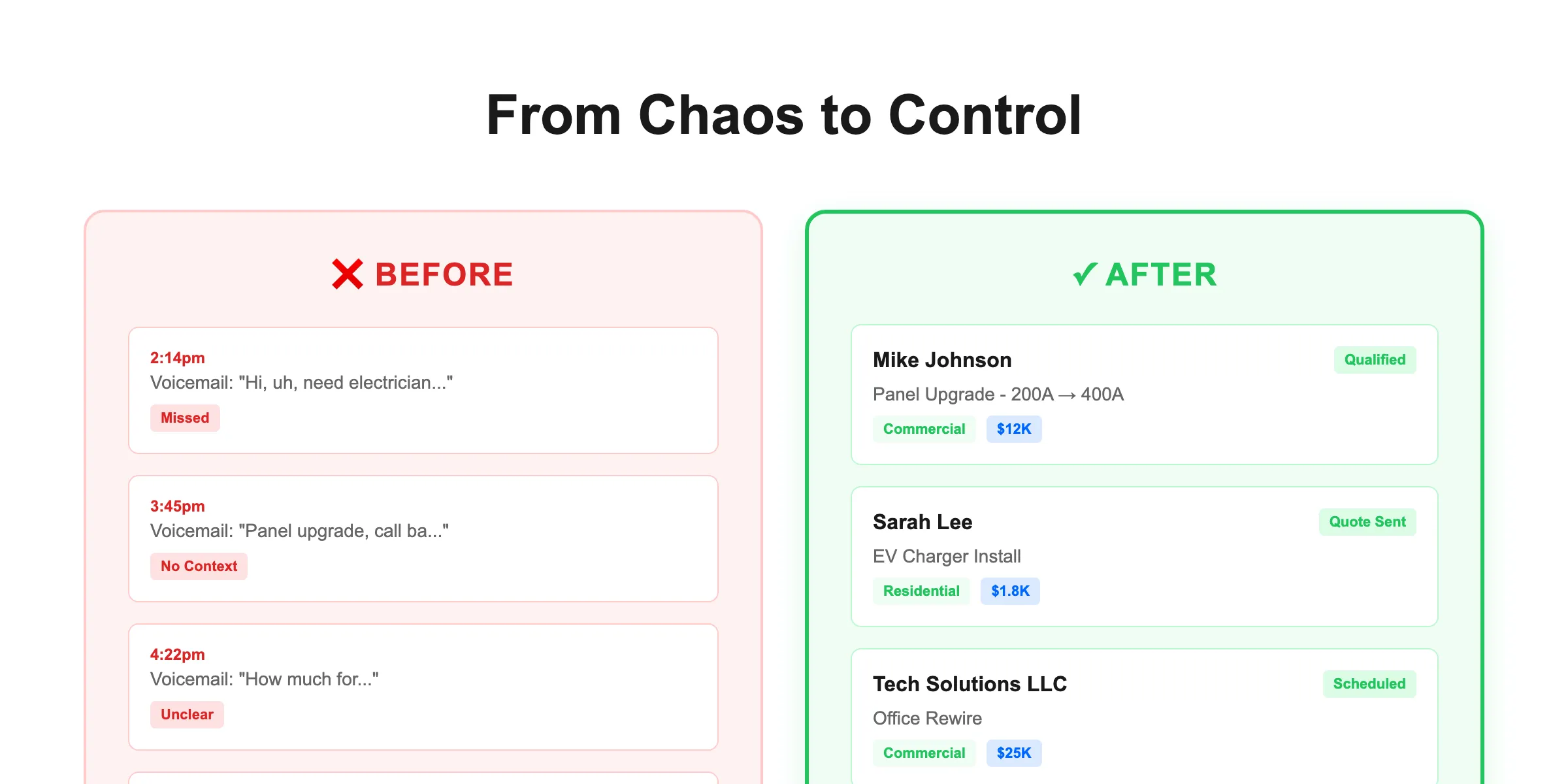
The Results:
- Response time: 4 hours → 6 minutes (40x faster)
- Bid win rate: 18% → 48% (+167%)
- $31,000 additional monthly revenue from faster bid response alone
- 15x ROI in the first 90 days
"Customers literally tell us, 'You're the first one to call back—when can you start?' Speed wins in electrical contracting. My AI operator responds in 6 minutes while my competitors are still reading their voicemails. That's the competitive advantage." — David Kim, Owner
What AI for electricians does not do
AI can improve bid speed and communication consistency, but it does not replace licensed electrical judgment, code interpretation, or field execution responsibility.
- It does not replace licensed electrical troubleshooting or safety decisions onsite.
- It does not approve compliance, contract, or pricing exceptions without your rules.
- It does not remove estimator oversight on high-value commercial opportunities.
- It does not replace PM accountability for delivery, QA, and handoff.
Setup required before go-live
Fast rollout depends on clear channel coverage, qualification logic, and escalation ownership. Teams that define these upfront usually see faster adoption and cleaner lead quality.
- Inbound channels active across phone, SMS, web, or messaging.
- Qualification prompts for residential vs commercial project fit.
- Escalation rules for emergency calls and high-value bid opportunities.
- Template library for bid response, scheduling, and follow-up sequences.
Implementation checklist (first 7 days)
- Connect channels and verify first-response behavior in all lead paths.
- Set qualification prompts for scope, budget, timeline, and site readiness.
- Enable scheduling and estimator-notification rules.
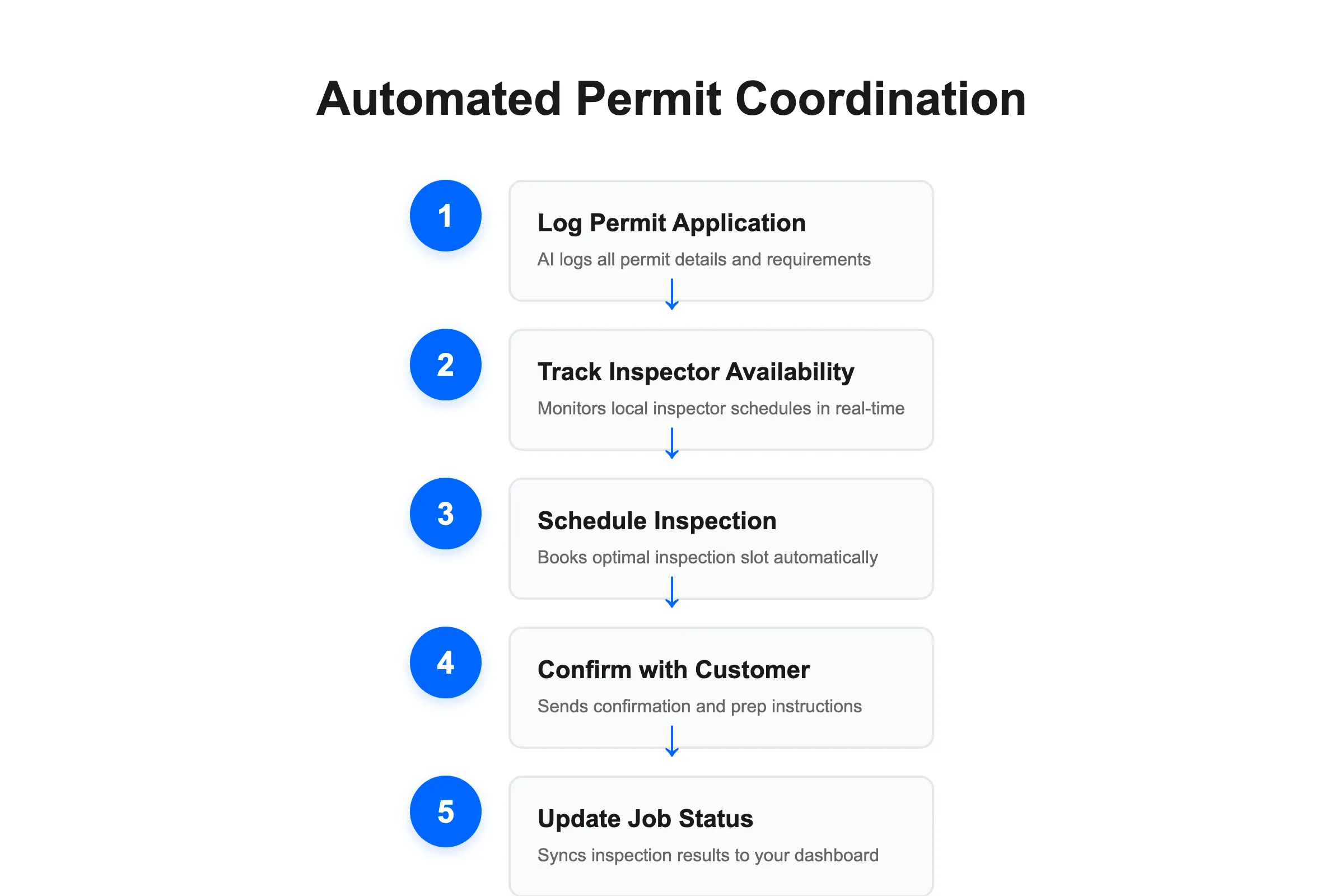
- Configure permit/inspection communication templates.
- Review live conversations daily and confirm routing thresholds are performing as expected.
What AI for electricians does: 8 workflows that usually create the fastest lift
Faster first response is only useful when qualification and next-step routing stay tight.
- First-response automation: capture inbound intent within minutes.
- Bid qualification: filter scope-fit leads before site walks.
- Residential booking flow: reduce callback loops and no-shows.
- Commercial routing: escalate serious opportunities to estimators fast.
- Permit/inspection reminders: keep milestone communication on schedule.
- Quote follow-up: automate reminders for unclosed opportunities.
- Completion messaging: send post-job updates consistently.
- Review/reactivation: turn completed jobs into repeat demand.
These workflows improve speed without forcing crews to change field behavior. They create a tighter front-end funnel and stronger follow-through after quotes are delivered.
For electrical teams, the leverage comes from sequence discipline: qualify first, route fast, and keep next-step communication predictable. When that sequence is stable, estimators spend less time on low-fit inquiries and more time on opportunities that are actually closeable.
In practice, this means fewer site walks that go nowhere, cleaner estimator calendars, and better conversion from inquiry to signed work. The workflow layer is not about volume for its own sake; it is about protecting margin by focusing your team on qualified demand.
Residential vs commercial lead handling model
| Area | Residential | Commercial |
|---|---|---|
| Qualification | Service type, urgency, occupancy window. | Decision-maker access, scope complexity, budget tier. |
| Scheduling | Fast booking and reminders for attendance. | Site walk timing with stakeholder coordination. |
| Escalation | Safety-critical incidents to on-call electrician. | High-value opportunities to estimator/owner review. |
Get started straight away + self-learning growth plan for electrical teams
Immediate start: Foundations
- Connect channels and validate first-response speed.
- Define qualification logic for residential and commercial work.
- Set emergency escalation and estimator routing rules.
Right after connect: Core activation
- Enable bid-response templates and site walk booking.
- Configure permit and inspection communication flows.
- Activate quote follow-up reminders.
Ongoing: Self-learning growth
- Monitor response quality while the operator learns from real bid outcomes.
- Refine high-value lead escalation thresholds only when commercial priorities change.
- Activate review/reactivation workflows for completed jobs.
How to measure success in the first month
- Bid response speed: median minutes to first qualified reply.
- Qualified site-walk rate: visits that meet fit criteria.
- Bid win rate: closed opportunities from qualified leads.
- Permit coordination reliability: on-time communication milestones.
- Follow-up completion: quote and post-job workflow consistency.
Best fit vs not ideal fit
Best fit
- Teams losing bids due to slow response and fragmented intake.
- Businesses handling mixed residential and commercial demand.
- Owners wanting better conversion without adding dispatch payroll.
Not ideal fit
- Teams without clear qualification or escalation ownership.
- Operations expecting AI to replace licensed field decisions.
- Businesses unwilling to standardize template-based communication.
Common rollout mistakes and how to avoid them
Electrical teams usually lose momentum when routing logic is unclear at launch. If estimator escalation, emergency handling, and qualification boundaries are not explicit, response speed can improve while lead quality degrades.
- Chasing speed only: fast response without fit qualification.
- No commercial routing: high-value leads not escalated fast enough.
- Permit gaps: weak inspection messaging causing avoidable delays.
- No owner cadence: missing a consistent routing and exception checkpoint.
- Template drift: tone inconsistency across channels and job types.
The reliable path is narrow launch plus disciplined oversight. One clear owner, one fixed checkpoint cadence (typically weekly), and one backlog for policy updates creates predictable gains while the operator keeps learning from live traffic.
Example operating day with AI handling bid intake
Mapping an operating day makes value obvious. It shows exactly where faster response and stronger qualification protect conversion without adding dispatch overhead.
- 6:00-8:00 AM: overnight inquiries get sorted into emergency, urgent, and routine.
- 8:00-11:00 AM: residential bids get fast responses and booking options.
- 11:00 AM-2:00 PM: commercial opportunities get qualified and routed to estimators.
- 2:00-5:00 PM: permit/inspection reminders reduce scheduling friction.
- After hours: emergency flows stay active while routine leads are captured cleanly.
Teams usually feel this in two places first: cleaner estimator calendars and higher conversion from qualified lead volume.
Bid-routing scorecard used by winning teams
High-performing electrical operators typically run one routing review per checkpoint cycle (often weekly) with a simple scorecard. This is governance, not manual retraining, and it keeps speed high without sacrificing conversion quality.
- Response SLA by channel: keep first-reply windows measurable.
- Qualified lead ratio: track fit quality before site walk assignment.
- Estimator load balance: avoid bottlenecks on high-intent opportunities.
- Commercial escalation hit rate: ensure high-value leads route correctly.
- Follow-up completion rate: prevent quote leakage in later stages.
If one metric drifts, update routing policy in the same week. The operator’s memory layer keeps learning from ongoing outcomes, so policy changes stay lightweight and targeted.
Keep escalation logic explicit: which leads route to estimators immediately, which stay in automated qualification, and which get deferred follow-up. This clarity protects calendar time for high-value opportunities while still keeping routine residential demand moving.
The strongest teams review missed-won and missed-lost outcomes on the same checkpoint cadence. That governance loop sharpens qualification policy, reduces unnecessary site walks, and improves win-rate quality instead of chasing raw response speed alone.
Keep ownership simple: one person accountable for routing health, one for estimator feedback, and one recurring checkpoint to review decision thresholds. This model keeps the system fast, predictable, and commercially aligned as lead volume grows.
Treat response speed as a leading indicator, not the end metric. The outcome that matters is qualified work won. Teams that connect routing quality to win-rate movement typically outperform those optimizing for speed in isolation.
Over time, this operating discipline compounds: cleaner qualification, better estimator focus, and stronger conversion quality across both residential and commercial demand.
FAQ: AI Operators for Electricians
How long does setup take?
Most teams get started straight away once channels and integrations are connected, then quality improves automatically as the operator learns from memory and live conversations.
Can the AI handle commercial lead qualification?
Yes. The AI asks qualifying questions about building type, scope, decision-maker presence, budget range, timeline, and financing. Low-quality leads get automated responses. High-quality leads trigger immediate notifications and site walk bookings.
Does it integrate with my scheduling software?
Yes. AI Operator integrates with Google Calendar, Jobber, ServiceTitan, FieldPulse, CompanyCam, and similar systems. It automatically books jobs into available slots while accounting for job duration and travel time.
What about permit coordination?
The AI integrates with your calendar and local permit timelines. It books inspection-ready dates, sends permit reminders to customers, confirms inspector access, and blocks your calendar to prevent conflicts. This feature alone saves 10+ hours per week.
More AI Solutions for Trade Businesses
Win More Bids by Responding 40x Faster
Every bid request that goes unanswered is revenue walking to a faster competitor. Every after-hours emergency that you miss is going to someone who answers first.
Sign up with email, choose a plan, and add your card to start your 7-day free trial. Cancel anytime.
Related Articles
AI for Plumbers: Capture Every Lead 24/7
How plumbers capture 94% of leads with 24/7 AI operators
AI for Contractors: Handle 47 Daily Tasks Without Chaos
How contractor teams reduce communication drag and coordination delays
How AI Operators Work
The complete guide to AI-powered customer communication for service businesses